


Functions and Capabilities of MATV Systems
A MATV system (Master Antenna Television) is a centralized system used to receive and distribute television signals to multiple locations within a building. Instead of each television having its own antenna or satellite dish, the system uses central receiving antennas and an organized television signal distribution network.
MATV systems are mainly used in installations where television distribution is required across many areas, such as:
- hotels
- stadiums
- airports
- apartment buildings
- hospitals
- universities
- commercial buildings
- residential complexes
By using a MATV system, television channels can be distributed to multiple TVs through a centralized cabling network.
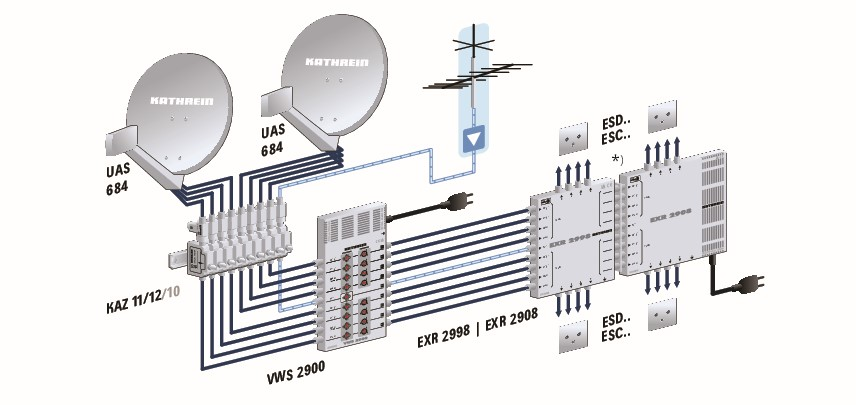
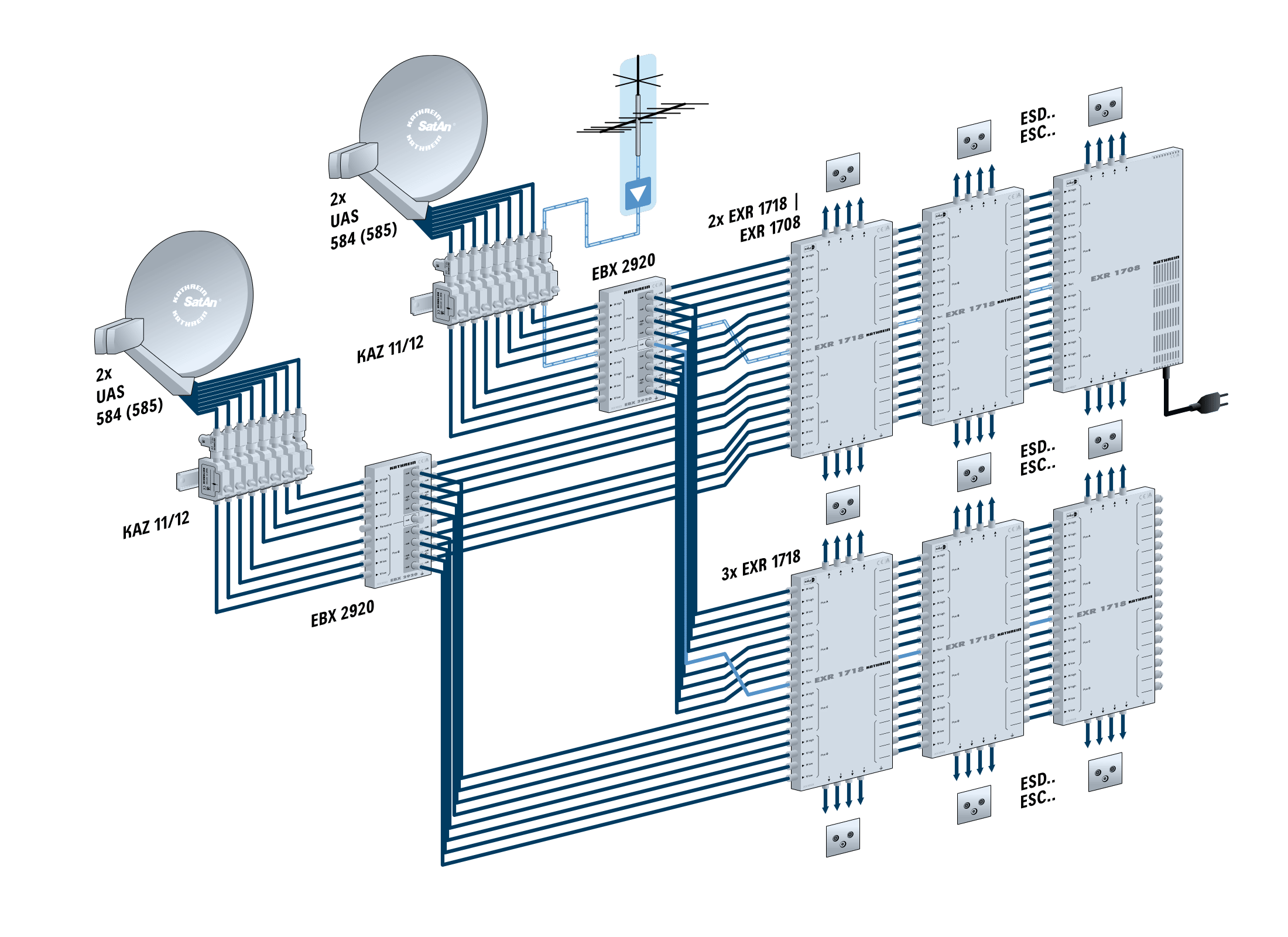
For a detailed overview of the architecture of these systems, see the complete guide on MATV / SMATV systems.
How a MATV System Works
The operation of a MATV system is based on a centralized television signal distribution architecture.
The system typically consists of four main operational stages:
- Television signal reception
- Signal processing
- Distribution through the cabling network
- Signal delivery to the TV outlets
In this way, television channels can be distributed simultaneously to all TVs within the building.
Television Signal Reception
The first stage of a MATV system is the reception of television signals through central antennas.
These antennas are usually installed on the roof of the building and may include:
- satellite antennas
- UHF terrestrial antennas
- VHF antennas
- FM antennas
These antennas receive broadcast signals and transmit them to the signal processing equipment through coaxial cables.
Signal Processing at the Headend
The headend system is the central point where the television signal is processed.
At this stage, functions such as the following take place:
- television channel processing
- signal conversion
- creation of multiplex channels
- distribution of the television signal to the network
In large installations, the headend may also convert satellite channels into IPTV streams.
Television Signal Distribution
After signal processing, the television signal is distributed throughout the building via a structured distribution network.
This network may include equipment such as:
- satellite distribution multiswitch systems
- RF television signal amplifiers
- splitters and tap-off units
- coaxial cables
- optical distribution via fiber optics
This equipment ensures that the television signal reaches every location in the building with stable quality.
TV Outlets and End Devices
At the final points of the network, TV/SAT wall outlets are installed, which connect to televisions or receivers.
From these outlets, users can receive the television channels distributed by the system.
In installations such as hotels, additional equipment may also be used, including:
- television decoders
- IPTV set-top boxes
- professional hospitality televisions
Advantages of a MATV System
Using a MATV system offers several advantages in installations with multiple televisions.
Some of the most important benefits include:
- centralized management of television channels
- consistent picture quality
- reduced installation costs
- easier equipment maintenance
- system scalability and expansion capability
For these reasons, MATV systems are widely used in large installations where reliable television distribution is required.
Conclusion
A MATV system provides an effective solution for distributing television signals in buildings with multiple television outlets. By using central antennas, headend equipment, and a structured distribution network, the system can deliver stable television signals to every TV within the building.
Proper system design and the selection of suitable equipment are key factors in ensuring the reliable operation of a television distribution system.
