


RG6 vs RG11: What’s the Difference? Which Coaxial Cable Is Suitable for MATV Installations?
When we talk about coaxial cables or antenna cables, we refer to one of the most important components of any terrestrial TV or satellite reception system, since the cable is responsible for the reliable transmission of the signal.
In MATV and SMATV television distribution systems, selecting the right coaxial cable is a key factor for ensuring proper network performance, signal stability, and long-term reliability.
Coaxial cables are used to carry TV and RF signals from:
- reception antennas
- headend equipment
- multiswitches
- TV outlets throughout the building
The two most common cable types used in professional TV distribution installations are RG6 and RG11. Understanding the difference between them is essential when designing or upgrading a MATV network.
What Is a Coaxial Cable?
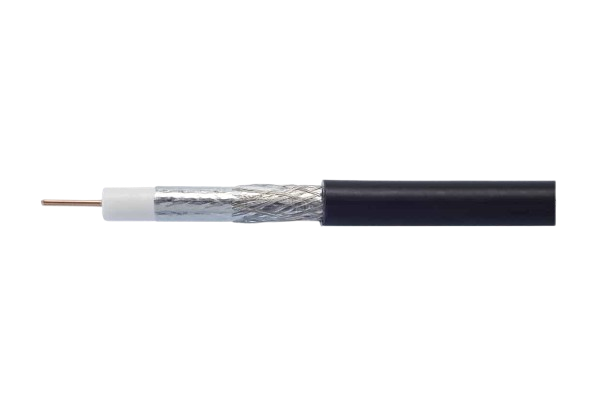
A coaxial cable is a type of cable designed to transmit high-frequency signals with low signal loss and effective protection against interference.
Its construction typically includes:
- a center conductor
- a dielectric insulation layer
- a shielding layer
- an outer jacket
High-quality shielding is especially important in TV and satellite distribution systems, as it helps protect the signal from electromagnetic interference (EMI) and ensures stable picture quality across the network.
RG6 vs RG11: Key Differences
Both RG6 and RG11 are widely used in MATV, SMATV, and satellite distribution installations, but they are designed for different applications.
RG6
RG6 is the most commonly used coaxial cable in TV installations. It has a smaller diameter, making it easier to handle, route, and terminate. It is typically used for cable runs that do not exceed approximately 60–70 meters, depending on the application, signal level, and frequency range.
RG11
RG11 is a thicker, lower-loss coaxial cable designed for installations where the signal must travel over longer distances with minimal attenuation. Although it provides lower signal loss than RG6, it is also less flexible and more difficult to install. Due to its larger diameter, RG11 should not be terminated directly at the final TV outlet of the network.
In most professional MATV systems, RG11 is used as a backbone or trunk cable, while RG6 is used for the final distribution lines.
Comparison of Kathrein Coaxial Cables for MATV Installations
In professional television distribution projects, installers often use high-performance coaxial cables that offer excellent shielding, low attenuation, and durability for indoor, outdoor, or underground installation.
The table below shows a selection of Kathrein coaxial cables commonly used in MATV and SMATV systems.
| Cable Type | RG Type | Main Features | Typical Use | Installation |
|---|---|---|---|---|
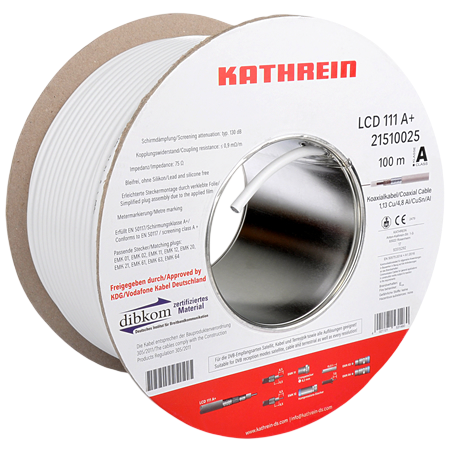
| Kathrein LCD 111 A+ | RG6 | High-shielding, low-loss coaxial cable | Satellite and terrestrial systems | Indoor |
| Kathrein LCD 115 A+ | RG6 | High-specification cable with excellent interference protection | Satellite and terrestrial systems | Indoor / Outdoor |
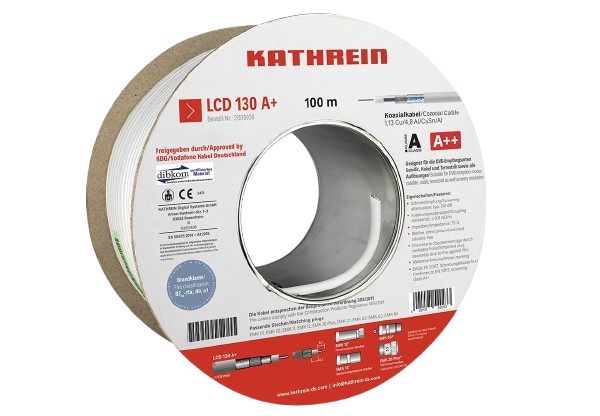
| Kathrein LCD 130 A+ | RG6 | Professional-grade, heavy-duty coaxial cable | Satellite and terrestrial systems | Indoor / Outdoor |
| Kathrein LCM 14 A+ | RG11 | Low-loss cable for long-distance signal transmission | Satellite and terrestrial systems | Indoor |
| Kathrein LCM 17 A+ | RG11 | Low-loss cable for long-distance applications | Satellite and terrestrial systems | Indoor / Outdoor / Underground |
When Should You Use RG6?
RG6 coaxial cable is the standard choice for most TV distribution installations, especially when cable distances are moderate and flexibility is important.
It is suitable for:
- internal building cabling
- connections between multiswitches and TV outlets
- residential satellite systems
- TV distribution equipment connections
Because it is easier to install, more flexible, and compatible with standard connectors and outlets, RG6 is the preferred solution for the majority of final distribution lines in a MATV network.
When Should You Use RG11?
RG11 coaxial cable is mainly used in installations where the signal must travel over long distances and where lower attenuation is required.
Typical applications include:
- large hotels
- residential complexes
- large MATV building installations
- underground cable routing
- main backbone distribution lines
Compared to RG6, RG11 offers lower signal attenuation, making it the ideal choice for central trunk lines and main signal paths within a professional TV distribution system. However, because of its size and stiffness, it is generally not recommended for final outlet connections.
RG6 or RG11 for MATV? How to Choose
Choosing between RG6 and RG11 depends mainly on:
- the length of the cable run
- the signal frequency range
- the required signal level at the outlet
- the type of installation environment
- whether the cable is used as a backbone or final distribution line
In most MATV systems:
- RG6 is used for branch lines and outlet connections
- RG11 is used for main distribution trunks and long cable runs
For best performance, many professional installations combine both cable types in the same system.
Conclusion
The choice between RG6 and RG11 coaxial cable for a MATV installation depends primarily on the distance, application, and signal loss requirements of the project.
- RG6 is the standard solution for indoor distribution and final connections
- RG11 is the preferred option for long-distance backbone cabling where lower attenuation is critical
In professional MATV and SMATV television distribution systems, using high-quality coaxial cables is essential to ensure signal integrity, system reliability, and long-term performance.
If you are designing or upgrading a TV distribution network, selecting the right coaxial cable is one of the most important technical decisions you can make.
